Our Approach
Consulting and training are not the same discipline, but they fail the same way — by skipping the analysis and going straight to the deliverable. ACS works from established models on both sides.

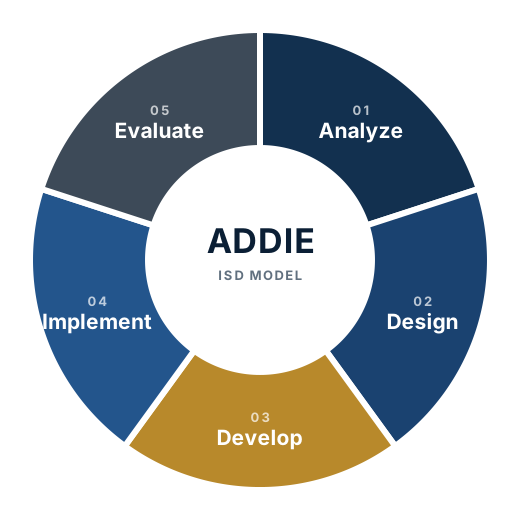
ADDIE: we analyze before we build.
ADDIE is the instructional systems design standard — a five-stage cycle that governs how every ACS program, specification, and training curriculum gets developed. It is deliberately front-loaded: nothing gets designed until the need has been measured.
-
01
Analyze Measure the facility, the workload, and the capability gap. What is actually happening, and what does the standard require?
-
02
Design Set measurable objectives and structure the solution — scope, frequencies, staffing model, or learning objectives and assessment criteria.
-
03
Develop Build the deliverable: the specification, the labor model, the inspection program, or the training materials and job aids.
-
04
Implement Put it into the building. Brief the supervisors, run the routes, deliver the training, and support the transition period.
-
05
Evaluate Inspect against the criteria set in Design — not against opinion. Findings feed the next cycle of analysis.
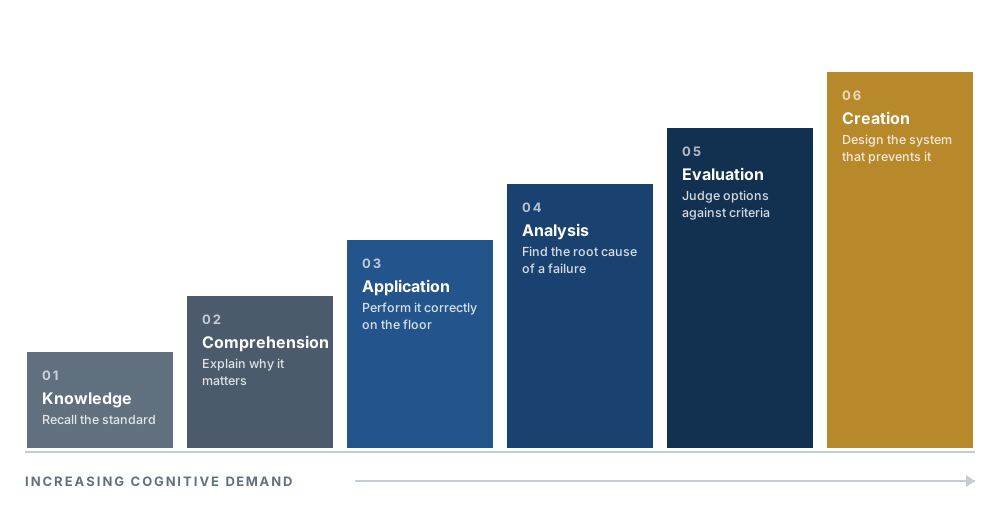
Six levels of learning: training to the right depth.
Most facility training stops at level one — tell people the rule and hope it sticks. But a cleaner, a supervisor, and an account manager need fundamentally different cognitive capability from the same subject matter. ACS builds to the level the role actually requires.
Levels 1–3
Cleaners need to know the procedure, understand why it matters, and apply it correctly and safely in the building every night. Training that stops short of application produces people who can pass a quiz and fail a floor.
Levels 1–4
Supervisors add analysis — identifying why a route is running long, why a complaint keeps recurring, where a method is breaking down. This is the level most training programs never reach.
Levels 1–6
Managers and owners evaluate options against criteria and create the systems, standards, and staffing models that prevent problems rather than react to them.
Production rates make the analysis real.
ADDIE says analyze first. In facility services, analysis without a measurement standard is just a more confident opinion. ACS uses BSCAI Production Rate Recommendations as the baseline for every labor model — task by task, area by area, inclusive of set-up and clean-up time.
Baseline rates assume conventional office space. Medical and clinical facilities, food service, laboratories, malls and high-traffic retail, airports and transit, education, and industrial floors all require documented rate adjustments. ACS flags every adjustment applied and explains the basis for it, so the model can be audited by either side of the contract.
The result is a number you can defend in a budget meeting and a contractor can staff without losing money — which is the only version of a facility services contract that survives past year one.
What makes an SOP usable in the field?
Our animated guide shows how clear scope, defined responsibilities, measurable standards, documentation, corrective action, and continuous improvement work together in a strong SOP.
Watch “What Makes a Good SOP?”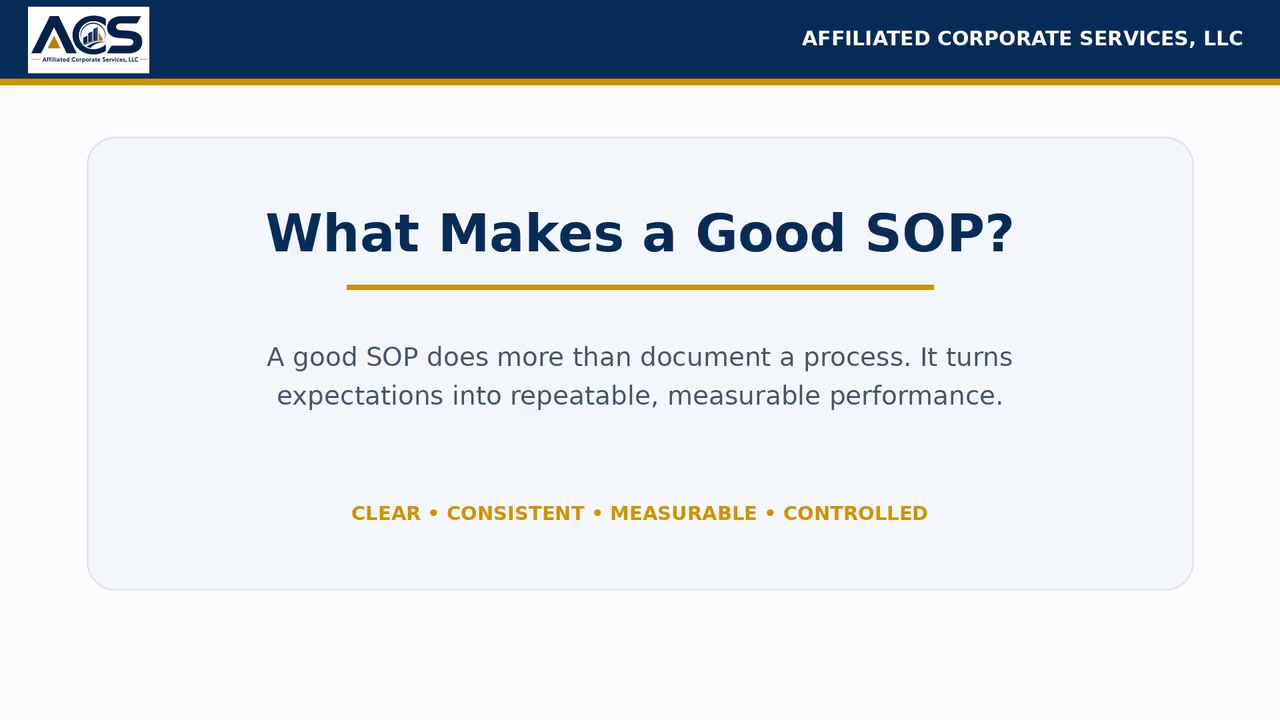
Put the method to work on your building.
Whether it's a specification, a bid, or a training program, the first step is the same: measure what's actually there.
Request a ConsultationOr call (336) 338-3454 · info@acsllc-nc.com